

on 31/08/2026
by Trevor Stephenson, Middle Years Science Teacher, Seymour College
The Ediacaran fossils of the Flinders Ranges are the oldest examples of complex life on our planet. They are also the most diverse.
Even though they were not related to human evolution, their place at the very dawn of animal life, over half a billion years ago, made them an ideal study point for this years’ Science Week theme: “Seeds of life”.
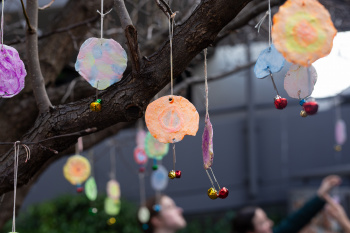
Professor Diego Garcia-Bellido, Associate Professor from Adelaide University, once described the Ediacara as “A different branch on the tree of life”. These wise words provided the inspiration for our own Seymour Ediacaran Tree of life near the Yurrebilla, on Barr Smith Campus.
Making the fossil wind-chimes was a relatively straightforward process.
- The fossil moulds were made out of air-dried clay, which was left to dry, before being painted.
- Two small holes were made in the painted fossils - one at the top (to thread a piece of string) and the other at the base (to attach a simple wind chime, made from a paperclip and two small bells).
- After a coat of varnish, for protection against the rain, the fossils were ready to be hung onto the branches.
Student engagement was high, with girls arriving from all over the middle and senior years to add their contribution to the project.
On the final day of Science Week former scholar, Mary Lou Simpson, joined the students to decorate the tree with the fossil named after her – Quaestio simpsonorum.
On clear days, the fossil wind-chimes catch the sunlight and sparkle on the tree branches. At other times, during windy weather, the bells gently chime, creating a pleasant sound for anyone passing by.
Staff, students and visitors to the college can all enjoy this delightful display which, like the tree of life, is rooted deeply in our past.
 |
 |
Share:


