

on 21/09/2026
(Highgate School’s Little Gardeners)
by Laureline Martin, Reception (FBBP) Teacher
At Highgate School, we aim to have a transdisciplinary approach as part of our IB programme. In our French Bilingual Binational Programme, the French language is also included in all learning areas.
In Term 2 for our Reception classes, our Unit of Inquiry was “How we Organise Ourselves” and our central idea “People care for living things in familiar places”. We included maths, science, the arts, and HASS, as well as French and English, so it was a busy term in perspective!
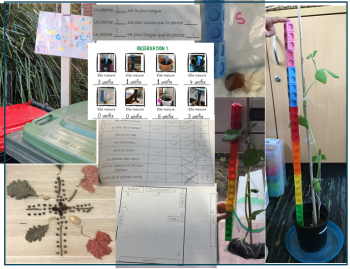
Our focus was on plants, and we used that lens to look at all other areas of the curriculum. In sciences, we looked at parts of the plants and their needs. We then did an experiment where we decided where to put broad bean seeds in the classroom (linking to maths and positional language) and in different conditions (soil, no soil, some water, no water, lights and no lights). Each week, we then measured our plants (linking again to maths but measurement this time) and compared them, analysing which one had grown (or not….) and what could have helped.
The students loved coming in the morning and walking around the classroom during connect time to look at the plants and measure them. By the end of the term, one had completely rotted while one had reached 33 unifixes, creating interesting discussions about what we could use to support its growth as it started to droop (the final choice was paintbrushes…).
As the plant grew, we learnt vocabulary (in French and English) for all the different parts of the plant as well as describing what they needed to grow. As we looked at plants, we also linked it to the area around us, discussing what we could do to look after our school’s green areas, which prompted the classes to create posters that were placed around the school to encourage all students to care for the environment.
Finally, we looked at special places and how gardens have inspired artists like Monet and Van Gogh. The students experimented with different materials (clay, paint, paper collage and nature art) to represent a place that is special to them and identify why it is so.
At the end of the term, our seeds retired to the garden bed outside our classroom (for those who survived the experiment at least!), and students enjoy checking on them from time to time, making sure they're still growing and looking forward to what will happen next.
Share:


