
on 23/11/2026
By Rachel Pillar, Year 11 and 12 Chemistry teacher at Kangaroo Island Community Education
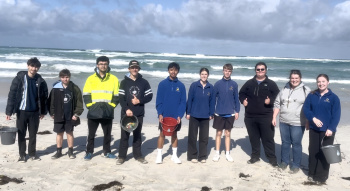
This year the Kangaroo Island Community Education Year 11/12 Chemistry class took its learning outdoors by focussing on the problem of marine plastic debris. After learning some basic polymer chemistry, the class ventured to Bales Bay on the Island’s South Coast on a wet and invigorating (aka cold and windy!) Wednesday to see what plastic could be collected from this remote, pristine stretch of coastline. We spent a good hour or so battling the wind and rain showers but we were astonished to find so much plastic waste. Although there were relatively few large items, once we looked more closely there was a myriad of smaller plastic pieces on and beneath the sand’s surface. After scouring the beach and collecting as much plastic as possible, we returned to the classroom to wash and sort our haul (and dry our clothes using a hair dryer from the lab!)
We were planning to recycle as much of our waste as possible using our benchtop shredder and injection moulder, so we sorted the thermoplastics that don’t produce toxic products upon heating (HDPE, LDPE and PP) from other types of plastic. We then blended these with a large quantity of virgin plastic to create useful products such as pens and dominoes.

Following on from our learning, the Year 11 class turned to investigate an alternative to fossil fuel-derived plastic materials: bioplastics. We synthesised a simple starch-based biopolymer using the Royal Society of Chemistry’s online resources, then worked collaboratively to design our own semi open-ended investigations. One team investigated the effect of plasticiser quantity on polymer strength, and the other investigated the relationship between starch composition (amylopectin: amylose ratio) and polymer water absorption. Although the water absorption results were unreliable, the plasticiser team collected some excellent data!
Students were highly motivated and enjoyed the opportunity to connect their chemistry learning to the global issue of plastic waste by taking action to conserve our local environment.
A big thank you goes to the Kangaroo Island Landscape Board for helping fund this work through their Grassroots Grant program and supporting hands-on environmental education for our students.
Share:


