

on 06/04/2026
by Daniella Edwards
Imagine being able to correct a spelling mistake in DNA the same way you fix a typo in a document. Instead of rewriting the entire sentence, you simply find the incorrect letter, delete it, and replace it with the correct one.
That idea might sound like science fiction, but it is increasingly becoming reality thanks to a gene-editing technology known as CRISPR.
As a researcher, I've watched this technology rapidly transform what scientists can do in the lab. Experiments that once took years to design are now becoming faster, more precise, and far more accessible. For students learning biology today, CRISPR offers an exciting glimpse into how modern science is evolving in real time.
What actually is CRISPR?
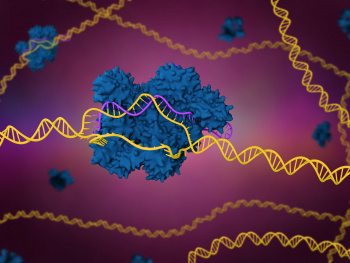
CRISPR is often described as a pair of molecular scissors. Scientists can program the system to find a specific sequence of DNA within a cell and cut it at that exact location. Once the DNA is cut, the cell’s natural repair mechanisms take over. During the repair process, scientists can remove faulty genes, correct mutations, or insert new genetic material.
In simple terms, CRISPR allows researchers to edit genes.
 The surprising part of the story is where this technology came from. CRISPR was first discovered while scientists were studying bacteria. Researchers noticed strange repeating sequences in bacteria DNA and eventually realised they were part of a bacterial immune system. These sequences help bacteria recognise and destroy viruses that try to infect them.
Once scientists understood how this system worked, they realised it could be adapted as a powerful laboratory tool. What began as basic research into bacterial genetics quickly became one of the most important breakthroughs in modern biology.
Why are Scientists so excited about it?
Before CRISPR, editing DNA was technically difficult, expensive, and often unreliable. Researchers had tools to modify genes, but the process could take years and required extremely specialised techniques.
CRISPR changed that almost overnight.
Because it is relatively simple to design and use, scientists around the world can now edit genes in organisms ranging from bacteria and plants to animals and human cells. This has dramatically accelerated research across many areas of biology.
In medicine, researchers are investigating how gene editing might help treat genetic diseases caused by mutations in DNA. Conditions such as cystic fibrosis, sickle cell disease, and certain inherited blood disorders are all being explored as potential targets for CRISPR-based therapies.
Beyond medicine, CRISPR is also being used in agriculture. Scientists are working on developing crops that are more resistant to drought, pests, and disease, as well as crops that could have improved nutritional value.
In research laboratories, CRISPR has also become an incredibly valuable tool for understanding how genes work. By switching genes on or off, scientists can study how different genes influence development, disease, and cellular processes.
What does gene editing look like in the lab?
When people hear about gene editing, they often imagine futuristic laboratories filled with glowing equipment and dramatic breakthroughs.
The reality is usually much quieter.
Most of the time, the work involves pipettes, small tubes, careful measurements, and a lot of patience. Experiments need to be carefully planned, repeated multiple times, and constantly refined. Progress often happens in small steps rather than dramatic leaps.
But those small steps matter. When an experiment finally works—when you see evidence that a specific gene has been successfully edited—it can feel incredibly rewarding. It’s a bit like solving a puzzle, only at the microscopic level.
The important questions we still need to answer
With powerful scientific tools also come important ethical questions.
The ability to edit DNA raises discussions about how and where this technology should be used. Many scientists support using gene editing to treat serious diseases, but there is still debate about other applications.
For example, should scientists be allowed to edit human embryos? Where should we draw the line between treating disease and enhancing human traits? And if gene-editing therapies become widely available, who will have access to them?
These questions highlight something important for students to understand: science does not exist in isolation. Scientific advances are closely connected to ethical decisions, public policy, and societal values.
Why CRISPR is such a powerful classroom example
For educators, CRISPR is a fantastic example to share with students because it shows how science really works.
First, it demonstrates that major breakthroughs often come from unexpected places. What began as research into bacterial genetics eventually led to a technology that may transform medicine.
Second, it shows that science is constantly evolving. The ideas students learn in classrooms today are still being refined and expanded by researchers around the world.
Most importantly, CRISPR sparks curiosity. Once students realise that scientists can edit genes, the questions start flowing: How does it work? What could we fix? What should we change? What shouldn’t we change?
Those questions are exactly what science education is meant to inspire.
A future still being written
CRISPR is still a relatively new technology, and scientists are continuing to improve its accuracy and explore new applications. While we don’t yet know exactly where gene editing will lead, it is already reshaping how researchers think about biology, medicine, and the future of biotechnology.
For today’s students, that future is not far away.
In fact, the next major breakthrough in gene editing could come from a student sitting in a science classroom right now.
Share:


