

on 09/06/2026
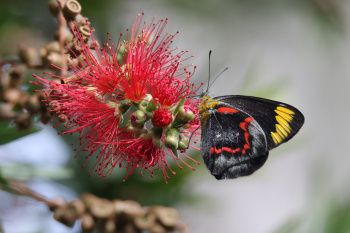
Have you thought about tailoring your Oliphant Science Awards project to suit the Australian Entomological Society Award? This Sponsor Prize will be awarded to the most outstanding entry across the Oliphant Science Awards that demonstrates understanding of the biodiversity, biology, behaviour or ecology of insects and/or their allies.
Here are some ideas for projects targeted towards this Sponsor Prize.
Photography
- Nature’s Architects: Document how insects reshape their environment for shelter and feeding by creating tunnels, folding leaves or crafting silk structures.
- Life at Ground Level: Showcase the role of beetles, ants, millipedes and isopods in decomposition and nutrient cycling by photographing them at work under leaf litter.
- Animals in Nature: Focus on predator-prey relationships and ecological interactions by photographing ladybirds eating aphids, dragonflies hunting or praying mantises stalking their prey.
- Close Encounters: Macro Photography of Nature's Details: Investigate structural colour and camouflage by capturing close-ups of butterfly or moth wings.
Programming, Apps and Robotics (including electronic games)
- Biomimetic Drone: design a drone that mimics the precise wing movements and agile motion of a dragonfly to avoid hitting obstacles.
Games
- Build an Ant Colony: design a strategy/resource management game where players explore social insect behaviour by establishing and growing an ant colony. They need to cooperate and organise actions to forage and gather food, raise the brood, defend against predators, and expand underground tunnels.
Models and Inventions
- Create a model to show metamorphosis for a butterfly, dragonfly or cicada. Your model might feature moving parts that transform between stages to show development throughout the insect’s life cycle.
- Develop a prototype Smart Pollinator Monitoring Station that records pollinator visits to flowers. The station might feature motion sensors, a camera system and a species and data collection dashboard.
Science Writing
- My Backyard Biosphere: A Day in the Life of a Native Bee. Write from either a scientific or creative nonfiction perspective and follow a native bee through a typical day in a backyard habitat. You might explore nesting behaviour, pollination, plant preferences or threats from habitat loss.
Posters
- Pollinators in Action: Pollination by Night. Investigate the role of moths and other nocturnal insects.
- Under the Surface: One Handful of Soil. Explore the biodiversity that can be found in a small soil sample, including species counts, microscopic observations and ecological roles.
- Natural History Illustration: Insect Mouthparts - Built for Survival. Compare the specialised mouthparts of different insect groups.
- Waste Not: From Leaf Litter to Living Soil. Show how insects play a fundamental role in terrestrial ecosystems by helping convert dead plant material into nutrients.
Multimedia
- Backyard Biodiversity Atlas. Create a web-based collection of illustrated insects observed locally. Include their identification features, habitat preferences, ecological roles and suggestions for how they can be conserved.
Science Investigations
- Do Native Plants Attract More Insect Species Than Exotic Plants? Survey insect visitors on different plant types, including number of species, number of visits and types of insects observed.
- What Happens After Dark? Compare daytime and nighttime insect communities by measuring species richness, abundance and functional roles.
Share:


