
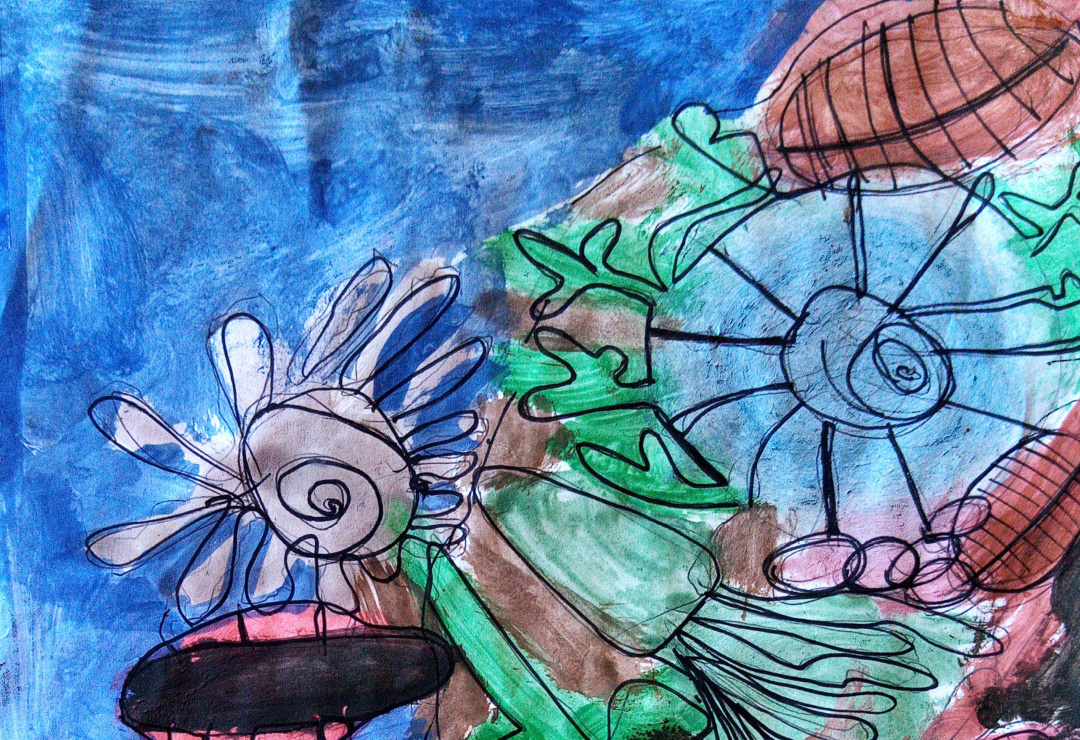
The Mary Anning Art Prize is an exciting initiative that encourages students to explore the fascinating world of palaeontology through creativity. Named after the pioneering fossil hunter Mary Anning, this competition inspires young artists to showcase their understanding of prehistoric life through art.
SASTA has proudly supported the Mary Anning Art Prize since 2022, working alongside Michael Mills at HeapsGood Productions and Dinosaur University to expand its reach in schools. Together, we foster a love of science, history, and artistic expression in the next generation of young learners.
About the Prize
The Mary Anning Art Prize invites young South Australian artists to create an original artwork that tells a story about South Australia’s prehistoric past. To be eligible, entries must:
- Explore South Australia's rich fossil heritage
- Depict scientifically accurate prehistoric life
- Be created by an artist living in South Australia
By illustrating the ancient life forms that once roamed or swam where we now live, students gain a deeper connection to our unique place in the history of life on Earth.
Full details about the competition can be found here.
| Pliosaur by Cody Emms | Ammonite by Zazie Newall | Procoptodon by Teresa Kenworthy |
 |
 |
 |
The Story Behind the Mary Anning Art Prize
The chronicle of life in Australia is indelibly a part of our story. It is a unique story that begins with the emergence of life on Earth and continues to today. For we who dwell in the Land Down Under, it is part of exploring our own identity that drives us to ever onward to discover the boundless and beautiful forms that came before us on these fragile dusty plains.
We have a remarkable fossil heritage here in South Australia, across millions of years, and yet most South Australians know little of it. The Mary Anning Art Prize provides a unique opportunity for young South Australians to engage with that heritage, and help share its stories.
The Mary Anning Art Prize is an art competition where the aim of the prize is to encourage young people to explore and tell the stories of their local prehistoric stories, though art. It requires entrants to learn about the importance of scientific accuracy, creativity, and originality. It reminds them that the best art isn’t just a picture, or a sculpture. It tells a story.
The story of palaeontology pioneer Mary Anning, is a story mostly untold. It is a story of discovery against the odds of a woman in the early 19th century struggling to be heard while her discoveries were published by the men around her. It is the story of a woman defiant in her curiosity to ever explore the world around her, no matter the barriers thrown at her.
Mary Anning's groundbreaking discoveries in the 19th century paved the way for modern palaeontology. The Mary Anning Art Prize recognises young artists who explore South Australia's prehistoric past through artwork inspired by local fossils. This initiative encourages creativity and appreciation for our region's unique heritage, fostering a new generation of science enthusiasts.
From stories about the Ediacara biota, the first big life found anywhere in the world, to Anomalocaris, and the half a billion year old trilobites from Kangaroo Island. Here we see see the best examples of some of the world's first great predators. In the Eromanga Sea, the shallow inland sea that covered much of South Australia, we have plesiosaurs ichthyosaurs, ammonites and other amazing sea creatures that swam where we now walk during the Age of Dinosaurs. What Mary Anning discovered during the Jurassic, we find right here from the Cretaceous. Then, of course, there are the giant marsupials we find in places like Naracoorte, Hallett Cove and Burra. A giant scissor-toothed possum! A wombat-like creature the size of a rhinoceros! Enormous, short-faced kangaroos that walked on two legs!
The first few years of the Mary Anning Art Prize has seen some wonderful artwork created by young South Australians engaging with our prehistoric stories. I firmly believe that this unique prize will not only continue to grow within South Australia, but that it has the potential to expand to the rest of Australia, and beyond. From so simple a proposition as an art prize that asks entrants to create a work of art that tells us something about their local prehistoric story, we have an opportunity to create something remarkable, and ongoing. I would ask you give serious consideration to being a part of this journey.
Michael Mills,
Creative Director, HeapsGood Productions
Vice Chancellor, Dinosaur University